Back to blog
DoorDash Prepares Nationwide Returns Service and Welcomes New Retailers
DoorDash is launching its flat-fee Dasher Returns service nationwide while adding major brands including Macy's and Anthropologie to its marketplace.
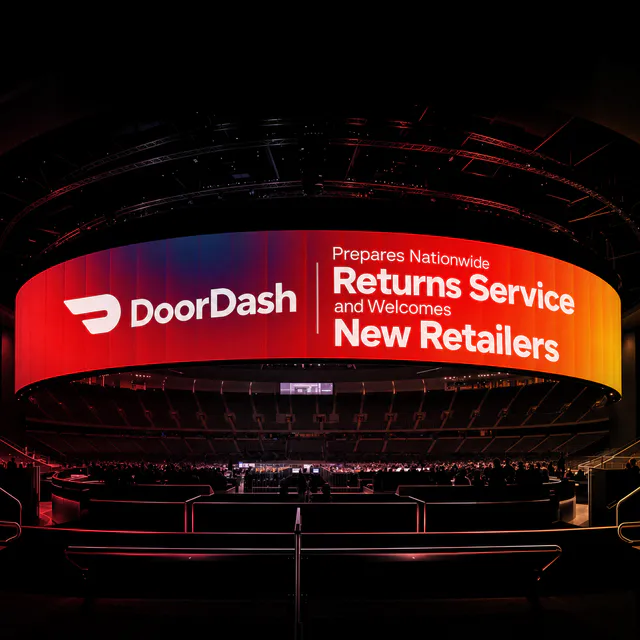
DoorDash is launching its flat-fee Dasher Returns service nationwide while adding major brands including Macy's and Anthropologie to its marketplace.
At its annual Dash Forward event in San Francisco on September 29, 2026, DoorDash unveiled a series of strategic expansions that signal a major evolution in on-demand commerce. Company executives, led by CEO and co-founder Tony Xu and Chief Revenue Officer Shanna Prevé, presented new platform capabilities designed to cover the full consumer transaction lifecycle. Beyond rapid delivery, DoorDash is officially stepping into reverse logistics with the launch of Dasher Returns—a doorstep collection service that returns eligible retail merchandise directly to local physical stores.
The announcement underscores a broader shift in last-mile logistics. Fast-delivery platforms are moving from pure food and grocery dispatching toward serving as digital store counters and logistics backbones for national brick-and-mortar brands. By combining instant local delivery with streamlined reverse fulfillment, DoorDash aims to eliminate two of the largest points of friction in e-commerce: long delivery windows and burdensome return processes.
"Every single one of these retailers has decided a customer shouldn’t have to choose between getting something fast and getting it from a brand they trust."
Reverse logistics has long been one of the most complex and margin-eroding aspects of digital retail. Standard e-commerce returns require consumers to package products, print shipping labels, and bring packages to carrier drop-off sites like FedEx, UPS, or post offices. Returns then travel through regional distribution centers, often taking weeks to clear inspection, re-enter inventory, and trigger customer refunds.
Dasher Returns introduces a local direct-to-store model that sidesteps traditional parcel networks. Under the new service, consumers can schedule a return pickup from their home for a flat fee. A courier arrives at the doorstep, collects the item without requiring a shipping box or printed label, and transports it directly back to the merchant's nearest brick-and-mortar storefront. Once delivered to the physical location, the store processes the return on the spot, enabling customer refunds within days rather than weeks.
"Because that inventory goes back on the shelves today, Gap has a chance to resell it to another mom, and I get my refund in days, not weeks," stated Shanna Prevé during the keynote presentation. She characterized the initiative as "the return experience I wish I always had."
For retailers, the operational advantage lies in rapid inventory reintegration. Returning an item to a nearby store shelf on the same day dramatically reduces markdown risks for seasonal apparel and high-velocity goods. DoorDash disclosed that Dasher Returns is currently launching in select cities, with plans for a nationwide U.S. rollout in November. The company aims to make 80% of the retail orders processed through its platform eligible for Dasher Returns by the end of 2026.
Alongside its returns initiative, DoorDash announced significant additions to its retail marketplace. The company named five major global brands joining its app: Macy’s, Anthropologie, The North Face, Timberland, and Vans. These additions expand DoorDash's presence in apparel, outdoor equipment, footwear, and home goods, building on recent platform additions such as Costco, Lowe's, and Gap.
Across its multi-platform network—including DoorDash, Deliveroo, and Bolt—the enterprise now connects shoppers with more than 200,000 retail and grocery locations. The addition of major department stores and lifestyle brands reflects a growing demand among physical retailers to turn existing storefront networks into active micro-fulfillment nodes.
The partnership with Macy’s highlights this trajectory. Josh Janos, vice president of marketplaces and digital partnerships at Macy’s, joined DoorDash executives on stage to detail the evolution of their relationship. Macy’s initially began working with DoorDash in 2020 as a white-label same-day and next-day fulfillment service for orders placed on Macys.com, the Macy’s mobile app, and Bloomingdales.com. Under the new arrangement, the entire Macy’s catalog is available directly within the DoorDash Marketplace app.
Macy’s ranks No. 17 in Digital Commerce 360’s Top 2000 Database of North American e-commerce leaders. The expansion into marketplace storefronts allows Macy's to capture high-intent, local same-day traffic that might otherwise go to online-only platforms. Highlighting the deepening commercial bond between the two companies, DoorDash also announced its participation in the 100th Macy’s Thanksgiving Day Parade on November 26 in New York City.
Beyond retail listings and returns, the Dash Forward event showcased technological upgrades across DoorDash's logistics infrastructure and software stack. In physical automation, DoorDash displayed its custom-built DoorDash Air autonomous aircraft. Designed for quick-turn lightweight deliveries, DoorDash Air is entering operational pilot tests in Northern California with food delivery partners Chipotle and Popeyes.
DoorDash also provided updates on Dot, its wheeled autonomous delivery robot. Chief Product Officer and co-founder Stanley Tang shared that Dot units are actively scaling across Greater Phoenix, completing deliveries for more than 2,000 store locations ranging from local restaurants like Grove and Real Cafe to national chains like Little Caesars. Tang noted that each Dot robot is completing three times the volume of deliveries compared to the previous year, navigating sidewalks, bike lanes, and local roads.
On the software side, DoorDash introduced a suite of AI-driven customer and operational tools:
DoorDash MCP (Model Context Protocol): Designed for corporate ordering, allowing enterprise AI agents to interface directly with DoorDash's backend system to handle team orders and restocking.
Text DoorDash: A conversational text-message ordering channel for iOS users, currently available via waitlist, allowing customers to search, select, and purchase items directly within SMS threads.
Ask DoorDash: A conversational shopping interface embedded in the consumer app to assist with product discovery and recommendations.
DashBuddy: An AI-powered SMS assistant built for delivery drivers (Dashers) to resolve real-time operational questions and support inquiries on the road.
The convergence of same-day marketplace ordering, automated local delivery, and doorstep returns points to a broader structural trend in retail distribution. As consumer expectation shifts toward immediate fulfillment and frictionless returns, physical retail stores are acquiring a distinct strategic advantage over centralized e-commerce warehouses.
By utilizing gig-economy couriers and local store footprints, platforms like DoorDash allow traditional retailers to compete directly with pure-play e-commerce platforms on speed while keeping store inventory liquid. The ability to accept unboxed returns at local counter locations and immediately re-enter items into store stock solves a major margin bottleneck for soft goods and fashion categories where return rates frequently exceed 20% to 30%.
Furthermore, multi-channel marketplace distribution presents both opportunities and complexities for brand owners. While joining third-party marketplace apps provides immediate access to high-intent local buyers, it requires strict channel management, inventory synchronization, and unified pricing strategies across digital touchpoints.
The rapid expansion of local marketplace fulfillment and same-day delivery networks changes the unit economics of multi-channel retail. When evaluating whether to expand catalog presence across on-demand platforms or optimize physical store inventory for localized delivery, brand managers must carefully analyze category demand, localized purchasing behavior, and channel margin structures.
Mettra’s niche analysis tool enables sellers and brands to evaluate market demand, category density, and competitive positioning across retail channels. By analyzing real-time product performance, price sensitivity, and category-level buyer velocity, Mettra gives decision-makers the data needed to evaluate marketplace expansion opportunities and build profitable channel strategies.
U.S. Customs and Border Protection wants import bonds required on low-value imports.
Read article