Back to blog
Meta Blocks TikTok Links in Ads Across Seven Markets
Meta has blocked TikTok links in advertisements across seven markets, cutting off third-party cross-platform paid funnels to TikTok Shop and ByteDance properties.
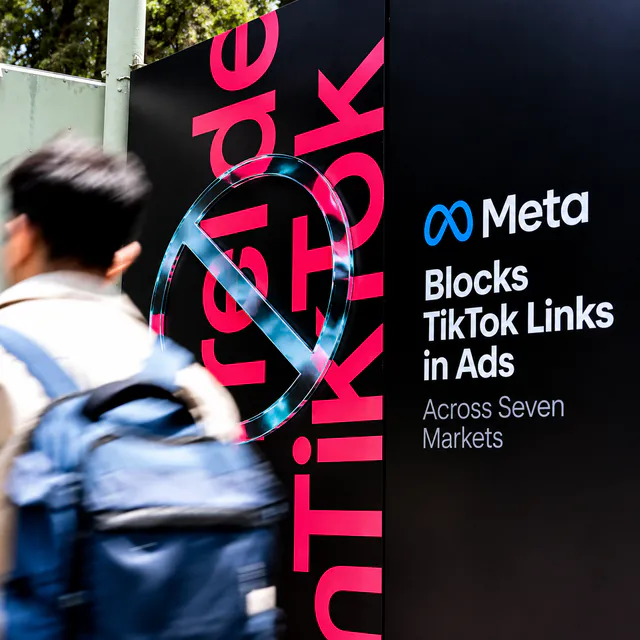
Meta has blocked TikTok links in advertisements across seven markets, cutting off third-party cross-platform paid funnels to TikTok Shop and ByteDance properties.
Meta has implemented an immediate policy restriction blocking ByteDance advertisements across Facebook and Instagram across seven key global markets. While a tech giant restricting a direct competitor’s brand marketing is not entirely unprecedented, the broader scope of Meta's enforcement directly impacts thousands of ecommerce sellers, digital agencies, and independent brands. Meta confirmed that the ban extends far beyond ByteDance's official corporate advertising accounts to cover third-party campaigns that direct users to TikTok or any other ByteDance-owned property.
The restricted jurisdictions encompass seven major regional economies: the United States, Canada, Egypt, Indonesia, Japan, Thailand, and Vietnam. In a statement confirmed to major news outlets, Meta framed the move as a standard business decision, explaining that the company has no obligation to sell promotional services to a competitor whose primary objective is diverting user engagement off Meta’s platforms.
"We don't have to run ads from a competitor whose goal is to pull people off our apps. Declining promotional services to a competitor is a normal business practice across industries."
For online sellers and performance marketers, the immediate implication is stark. Your advertising account does not need to belong to ByteDance to trigger a policy violation; if an ad run from your brand’s Meta Ads Manager directs shoppers to a TikTok profile, a viral TikTok video review, or a TikTok Shop checkout page, the campaign falls squarely inside Meta's new block.
Over the past two years, cross-platform growth tactics became a staple strategy for multi-channel merchants. Brand marketers routinely leveraged Facebook and Instagram’s sophisticated demographic targeting and custom lookalike audiences to seed external traffic into TikTok Shop product launches. A typical funnel involved running high-converting Instagram Story or Reel ads that opened a creator’s viral TikTok video or linked directly to a TikTok Shop product page where conversion rates and social proof were surging.
Merchants used these cross-channel paid flows because they combined Meta’s unmatched audience targeting precision with TikTok’s high-velocity checkout dynamics and algorithm-driven organic reach. By financing TikTok momentum using Meta’s ad inventory, brands could accelerate product search rank inside TikTok Shop, trigger trending algorithms, and collect creator affiliate sales simultaneously.
Meta’s policy enforcement lays bare the structural fragility of relying on one tech ecosystem to build momentum inside a rival walled garden. Meta’s commercial strategy is increasingly focused on converting Facebook and Instagram into end-to-end native commerce environments. Allowing brand advertisers to buy cheap discovery on Meta and transfer those high-intent buyers into TikTok’s commerce infrastructure directly undermined Meta’s own in-app shopping initiatives and user retention goals.
Meta’s public confirmation established the seven affected countries, the immediate effective date, and the explicit prohibition on direct links to ByteDance domains. However, Meta has not released a detailed granular enforcement guide covering complex ecommerce marketing setups. Brands utilizing intermediate link management platforms, creator landing hubs, multi-link bio pages, or smart app deep-link aggregators currently face considerable operational ambiguity.
Marketers should resist the temptation to circumvent Meta’s review systems through hidden link shorteners, multi-hop redirects, or cloaked landing pages. Attempting to disguise a TikTok destination violates Meta’s core Advertising Policies regarding landing page transparency and deceptive user experiences. Such tactics risk permanent ad account suspension, Business Manager bans, and broken attribution pixel data that can derail seasonal ad performance.
Beyond direct storefront links, the restriction impacts influencer recruitment campaigns, brand ambassador outreach, and affiliate syndication. Ads run on Instagram to recruit TikTok creators or drive traffic to creator profile portfolios inside any of the seven restricted markets are equally subject to disapproval under the updated policy rules.
Ecommerce brands operating in the seven affected markets must take swift administrative and strategic action to safeguard their ad accounts and campaign budgets. The first step is executing a comprehensive destination URL audit across Meta Ads Manager, including active campaigns, scheduled launches, saved drafts, and automated optimization rules.
Brands should systematically review all destination URLs, deep links, and primary calls-to-action on landing pages connected to active Meta ads. Any campaign directing traffic to a TikTok Shop page, TikTok user profile, or ByteDance domain in the United States, Canada, Egypt, Indonesia, Japan, Thailand, or Vietnam should be paused or pointed toward an unexposed destination immediately, rather than waiting for automated policy flags.
To maintain stable customer acquisition, Meta ad campaigns should be redirected to owned first-party assets, such as brand websites, dedicated product landing pages, or native Meta lead forms and Instagram Shop storefronts. Clean destination mapping ensures that ad spend continues driving measureable sales without violating platform policies or risking ad account health.
If driving traffic into TikTok Shop remains a core pillar of your growth plan, that ad spend should be migrated directly into TikTok Ads Manager or native TikTok creator affiliate incentives. When evaluating channel reallocation, brand managers should assess true contribution margins rather than relying solely on blended platform ROAS. A sale closed on a brand website versus a TikTok Shop order carries distinct cost structures, including platform take-rates, creator commission tiers, shipping subsidies, and return rate variances.
Abrupt platform policy shifts alter the economics of cross-channel acquisition across entire product categories. When a major paid traffic conduit closes, merchant acquisition costs fluctuate, causing immediate shifts in competitor ad spend, marketplace sales velocity, and category price sensitivity.
Navigating these cross-channel disruptions requires evaluating market dynamics at the niche level, looking beyond individual ad metrics to understand broad category movement, competitor positioning, and channel-by-channel unit economics. Mettra’s niche analysis helps sellers monitor emerging marketplace trends, track category-wide revenue shifts, and evaluate competitive landscapes so you can adapt your channel strategies with total financial clarity.
U.S. Customs and Border Protection wants import bonds required on low-value imports.
Read article