Back to blog
Best Buy to Launch on TikTok Shop
Best Buy is launching a direct storefront on TikTok Shop with nearly 10,000 products, bringing top consumer tech brands and omnichannel fulfillment into social feeds ahead of the holiday season.
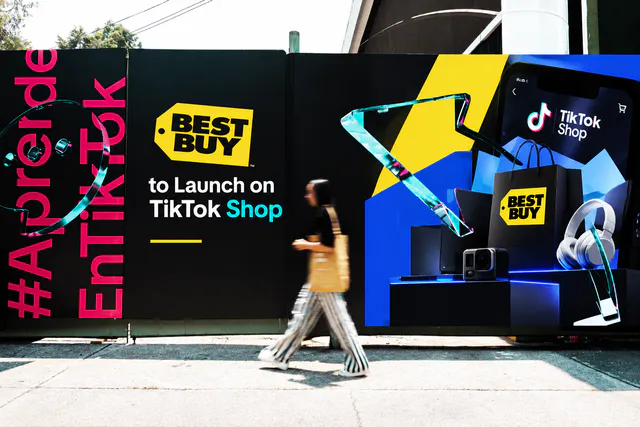
Best Buy is launching a direct storefront on TikTok Shop with nearly 10,000 products, bringing top consumer tech brands and omnichannel fulfillment into social feeds ahead of the holiday season.
Social commerce in the United States is undergoing a rapid evolution, moving away from low-cost impulse novelties and toward major, high-ticket consumer hardware. In late October 2026, Best Buy will officially launch a direct storefront on TikTok Shop, introducing a catalog of nearly 10,000 products ahead of the peak holiday shopping season. While earlier social commerce storefronts focused on boutique collections, limited product drops, or single viral hero items, Best Buy’s entry represents one of the largest big-box rollouts on the platform to date.
The expansion reflects a fundamental shift in how digital consumers interact with brand catalogs. Rather than treating short-form video platforms purely as top-of-funnel discovery channels that redirect traffic to external brand domains, major retailers are bringing their primary selling infrastructure directly into feed ecosystems. By embedding full purchasing capabilities inside TikTok, Best Buy is seeking to eliminate the friction and drop-off that historically occurred when shoppers had to leave their feed to complete a transaction.
This move builds on earlier retail additions to TikTok Shop, including cosmetics and fashion chains, but introduces a far higher unit-value assortment. The addition of consumer electronics, home appliances, and computing technology signals that social platforms are now viewed by enterprise retailers as scalable revenue drivers rather than experimental marketing channels.
Best Buy’s TikTok Shop storefront will span categories such as headphones, digital cameras, laptops, small home appliances, and technology accessories. The assortment features flagships from major global brands, including Dyson, Oura, Bose, and Microsoft. TikTok users can browse the complete product catalog through a dedicated Best Buy storefront page, a specialized Shop tab, individual product detail cards, and integrated shoppable video content created by influencers and brand partners.
A key differentiator in Best Buy’s setup lies in its operational backbone. Unlike pure-play marketplace vendors who rely on third-party fulfillment or standard postal shipping options, Best Buy will handle order fulfillment directly through its existing retail logistics network. This ensures that shipping speeds, inventory availability, and order tracking align with standard Best Buy e-commerce experiences.
Crucially, Best Buy is also extending its store footprint into customer returns. Shoppers who purchase eligible items via TikTok Shop will have the flexibility to return items by mail or return them directly in person at any local Best Buy retail store. Physical returns eliminate one of the primary friction points in social e-commerce—the hassle of repackaging and shipping back online orders—giving shoppers the security of traditional big-box customer service while buying inside a social feed.
Central to Best Buy’s launch on TikTok Shop is the integration of content creators. The company is wiring its established Best Buy Creator program directly into TikTok’s native affiliate infrastructure. Influencers and technology reviewers can highlight products in short-form video demonstrations, unboxing clips, and lifestyle content, allowing viewers to purchase featured gear directly without exiting the video stream.
"Social media isn't just influencing what people buy anymore. It's shaping how they discover products, with creators playing an increasingly important role in what people notice, consider and want to try. Launching on TikTok Shop lets us meet customers at that exact moment of discovery and make it easy to shop."
In addition to organic creator promotions, the storefront rollout opens up enhanced capabilities for brand partners via Best Buy Ads. Advertisers using Best Buy’s media network can incorporate creator-led shoppable content into paid advertising campaigns. These campaigns feature shoppable product tags and affiliate links while linking directly back to Best Buy’s first-party shopper data and attribution infrastructure.
This closed-loop media arrangement enables brand manufacturers selling through Best Buy to track which specific content formats, creator personalities, and product combinations drive engagement and closed conversions. By bridging creator commerce with first-party retail analytics, Best Buy provides brand partners with clear performance metrics on social ad spend.
The arrival of major enterprise retailers on social marketplaces fundamentally reshapes the competitive dynamics for independent sellers and mid-sized e-commerce brands. In past years, early entrants on social commerce platforms enjoyed lower advertising costs and organic feed dominance due to limited enterprise competition. With Best Buy bringing 10,000 mainstream SKU listings to TikTok Shop, competition for creator attention, affiliate partnerships, and feed impressions will intensify.
For electronics and accessory brands, this structural transition means social commerce can no longer be viewed as a secondary clearinghouse or novelty channel. Consumer hardware sales are migrating into discovery-driven feeds where visual demonstration and social proof dictate purchase timing. Brands competing in shared categories like audio, wearables, charging accessories, and smart home gear must now benchmark their product positioning against national retail assortments operating inside the same social feeds.
At the same time, Best Buy’s presence validates social commerce as a tier-one distribution channel for consumer tech. As social discovery platforms gain market share from intent-based search engines, sellers must adapt their catalog strategies to reach buyers at the point of initial engagement rather than waiting for deliberate search queries on traditional marketplace platforms.
When major retail aggregators expand into social selling platforms, category demand metrics and competitive benchmarks shift rapidly. Enterprise inventory rollouts can alter average selling prices, creator commission rates, and consumer search behavior within target niches. Understanding how demand is distributed across channels—and where market share is concentrating—is critical before committing capital to catalog inventory or promotional campaigns.
This is where Mettra’s niche analysis tool provides clarity. By evaluating market trends, demand depth, and platform competition across specific product categories, sellers can identify profitable product gaps, assess pricing elasticity, and determine whether a niche offers sustainable margin potential before scaling up catalog listings.
https://www.homepagenews.com/news/best-buy-adds-tiktok-shop-in-time-for-the-holiday-shopping-season/
U.S. Customs and Border Protection wants import bonds required on low-value imports.
Read article