





The Silent Margin Squeeze: eBay’s FX Rate Hikes
Selling globally on marketplace platforms offers unmatched audience reach, but it also exposes merchants to complex international fee structures. In late 2026, eBay quietly updated its official seller fee schedules to implement across-the-board increases to its seller currency conversion charges. Often referred to by veteran sellers as a 'hidden fee,' this currency surcharge is not billed as a standalone invoice item. Instead, it is embedded directly into the exchange rate applied when funds are converted between international listing currencies and seller payout currencies.
These fee revisions represent a direct increase in cross-border transaction costs for merchants operating across multiple regional markets. Under the revised fee schedules, sellers registered in the United States and Canada will see their currency conversion markup increase from 3.0% to 3.25%, taking effect on October 14, 2026. Meanwhile, sellers registered in the United Kingdom will experience a similar upward adjustment, with conversion charges rising from 2.5% to 2.75%, effective December 1, 2026. While a quarter-percent increase may appear modest on paper, its compounding effect across high-volume or high-ticket sales creates a substantial drain on seller net margins.
"If eBay converts your funds, the conversion will be completed at the transaction exchange rate we set for the relevant currency exchange. eBay's transaction exchange rate is composed of a base exchange rate plus a conversion charge. The conversion charge is a fixed percentage applied to the base exchange rate and retained by eBay."
How eBay’s Currency Conversion Mechanics Work
Understanding the financial exposure of these rate hikes requires examining how eBay processes multi-currency transactions under its managed payments framework. When a seller lists an item on an overseas site—such as a US seller listing directly on eBay Germany (eBay.de) in Euros—eBay executes currency conversions at two distinct operational points. First, any upfront fees incurred in the foreign currency (such as insertion fees or optional listing upgrades) are converted to the seller's home currency using eBay's transaction exchange rate at the time of listing. Second, when the item sells, the gross sales proceeds are converted from the transaction currency back into the seller's designated payout currency prior to disbursement.
eBay defines its transaction exchange rate as the wholesale market exchange rate—reflecting prevailing rates in institutional currency markets on the day of conversion or the prior business day—plus the fixed conversion percentage retained as revenue. Because this spread is baked into the applied exchange rate rather than itemized alongside final value fees on monthly financial statements, sellers who do not closely monitor raw FX market benchmarks frequently overlook the exact dollar value extracted by the platform during payout processing.
Regional Breakdown: Implementation Timelines and Rates
The updated currency conversion charges are staggered across major global territories, with specific implementation dates and rates governed by the seller's registered account address. In the United States, sellers registered with a US address will pay a 3.25% conversion charge starting October 14, 2026, up from the long-standing 3.0% benchmark. Canadian registered sellers face an identical timeline and rate adjustment, with charges increasing to 3.25% on October 14, 2026, regardless of whether their chosen account payout currency is set to CAD or USD.
For sellers based in the United Kingdom, eBay Commerce UK Ltd is enacting its rate adjustment slightly later in the calendar year. Effective December 1, 2026, UK registered sellers will see their currency conversion charge rise from 2.5% to 2.75%. While UK merchants retain a slightly lower base conversion percentage than their North American counterparts, the 25 basis point hike reflects a unified global strategy by eBay to expand financial service margins across all managed payment ecosystems.
The Stacking Surcharge: Compounding Cross-Border Costs
The primary danger of currency fee increases lies in how they interact with existing eBay transaction surcharges. A seller fulfilling an international order rarely pays only a single fee; instead, multiple transactional tariffs stack on top of one another. For example, a US seller shipping directly to an international buyer without utilizing eBay International Shipping incurs a standard Final Value Fee (typically 13.6% in core retail categories plus $0.40 per order), an International Fee of 1.65% for cross-border delivery, and the newly elevated 3.25% Currency Conversion Charge if the buyer transacts in a non-USD currency.
When these layerings are calculated together, total platform friction on a foreign order can comfortably exceed 18.5% of the total transaction amount—which includes the item price, shipping fees, handling, and applicable taxes. On a $1,000 cross-border transaction, platform commission and currency costs can swallow over $185 before shipping label costs, product sourcing expenses, or return reserves are accounted for. For lean cross-border operations operating on 10% to 15% net margins, an uncalculated 25 basis point shift in currency conversion can reduce bottom-line profitability by several percentage points.
Operational Tactics to Protect Cross-Border Margins
To defend against expanding FX spreads, multi-currency sellers must adopt active currency risk management techniques. One primary approach involves evaluating direct international listings versus platform-managed cross-border shipping programs. When sellers utilize programs like eBay International Shipping, the transaction often clears in the seller's local currency, shifting FX conversion dynamics or eliminating explicit cross-border international fees on eligible shipments. However, for merchants who maintain dedicated, localized listings on foreign eBay domains to maximize search rank and localized buyer trust, direct foreign currency exposure remains unavoidable.
For high-volume merchants, mitigating these surcharges requires repricing foreign catalog listings to absorb the higher fee floor. Sellers should adjust global repricing algorithms to incorporate a baseline 3.25% FX buffer (or 2.75% in the UK) alongside category final value fees. Additionally, where permitted by managed payments setup, sellers trading heavily in specific geographic regions should review multi-currency banking integration options to hold foreign currency balances or optimize payout pathways, minimizing unnecessary dual-conversions back to home currencies.
What this means for your numbers
Small percentage changes in platform policy can exert a disproportionate impact on business profitability when compounded across annual cross-border order volumes. An increase of 0.25% in currency conversion markup quietly shifts unit economics, eroding the net profit margin on every international item sold. Evaluating international profitability based on gross sales minus standard category commissions leaves a critical blind spot—failing to capture the true landing cost of currency conversions and stacked international surcharges.
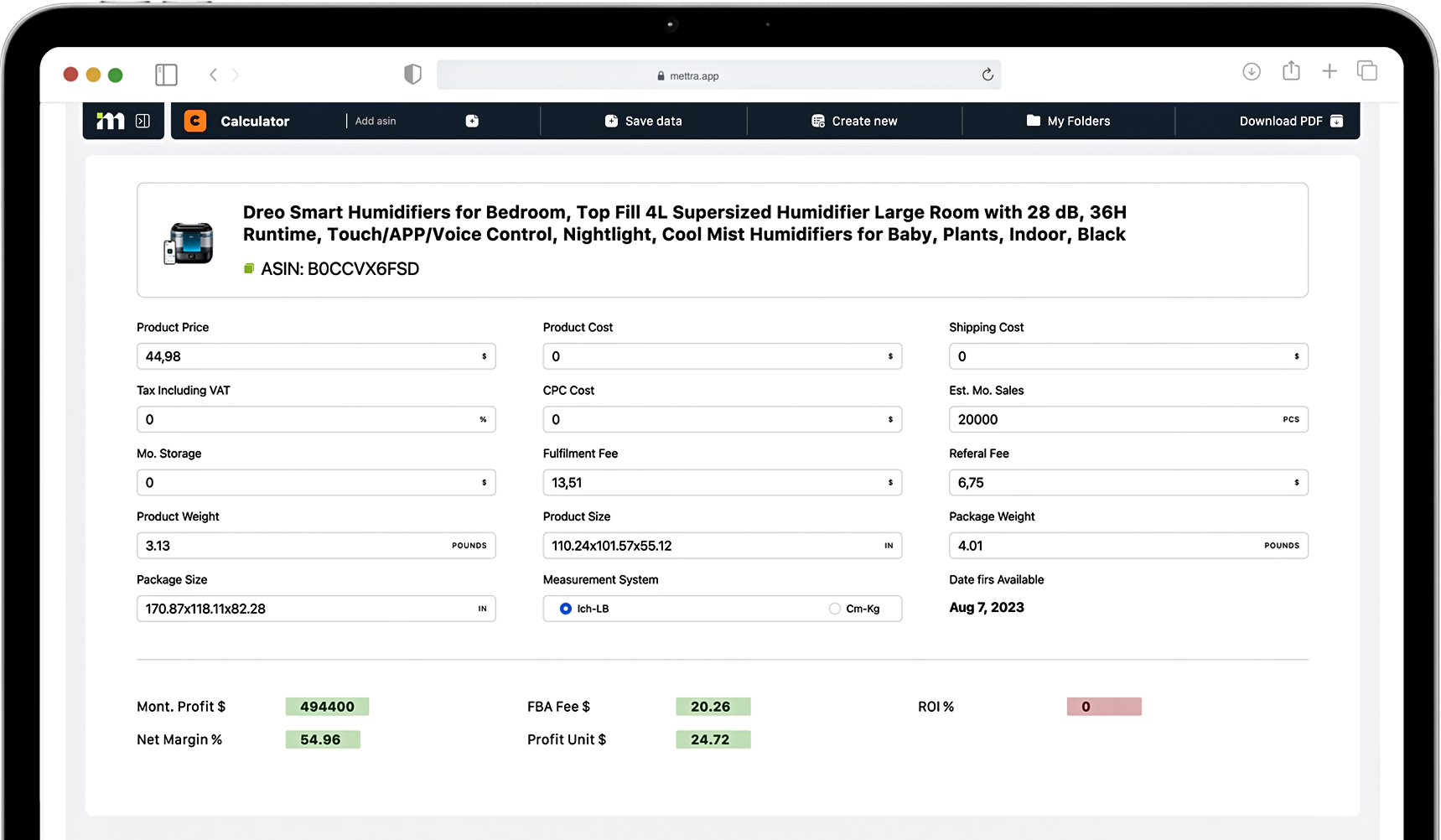
Protecting your bottom line against expanding marketplace markups demands complete visibility into every line item and embedded friction cost. Incorporating updated platform FX fees directly into your financial model allows you to analyze unit economics accurately, calculate true net margins by destination market, and establish pricing structures that safeguard profitability regardless of changing marketplace fee schedules.
Sources
https://www.ebay.com/help/selling/fees-credits-invoices/selling-fees?id=4822
https://www.ebay.co.uk/help/selling/fees-credits-invoices/fees-business-sellers?id=4822
https://www.ebay.ca/help/selling/fees-credits-invoices/selling-fees?id=4822


